
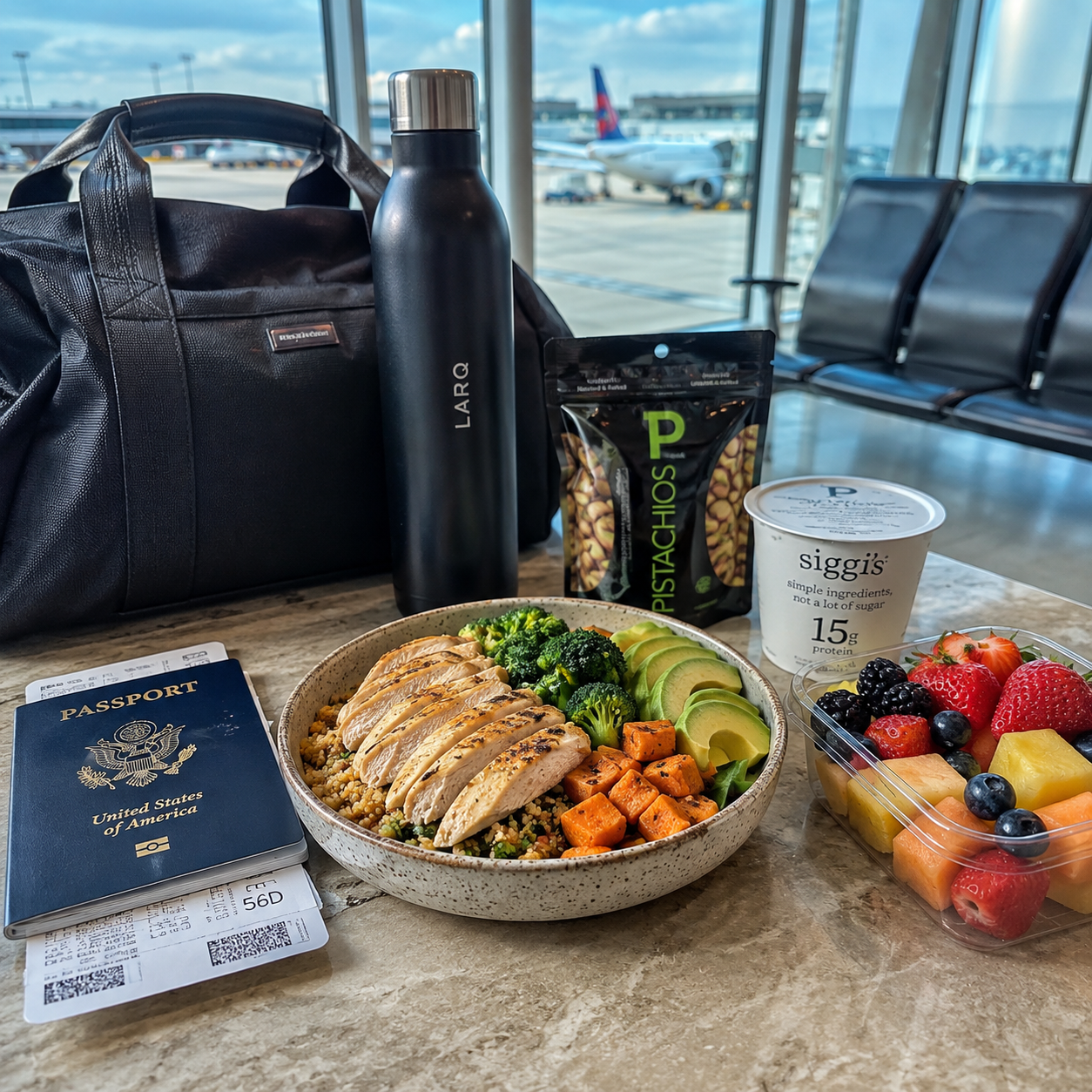


The Ultimate Guide to Jet Lag: How to Prevent It and Recover Faster
You've landed in Tokyo, Rome, or Buenos Aires — and instead of exploring, you're staring at the hotel ceiling at 3 a.m., wide awake, while your body insists it's lunchtime. Jet lag isn't just tiredness. It's a genuine physiological mismatch between where your body thinks it is and where the clock says you are. The good news: with the right approach, you can dramatically shorten that adjustment window and spend more of your trip actually present.
What Is Jet Lag and Why Does It Happen?
Jet lag occurs when your internal body clock — the circadian rhythm — falls out of sync with the local time at your destination. This 24-hour biological cycle governs when you feel sleepy, when you're alert, when you're hungry, and even how your immune system functions. Cross enough time zones fast enough, and the rhythm doesn't follow.
The circadian rhythm is anchored primarily by light. Specialized cells in your eyes send signals to the suprachiasmatic nucleus (SCN) in the brain, which acts as your master clock. When you fly from New York to Paris overnight and step into morning sunlight, your SCN is still running on Eastern Time. It takes time — and the right cues — to recalibrate.
Common symptoms include daytime fatigue, difficulty concentrating, disrupted sleep, digestive discomfort, and irritability. Most travelers crossing three or more time zones will feel some degree of this. The severity scales with how many zones you cross and, critically, which direction you fly.
Eastward vs. Westward Travel: Why Direction Matters
Flying east is almost universally harder than flying west — and there's a clear biological reason for it. The human circadian rhythm naturally runs slightly longer than 24 hours (closer to 24.2 hours on average). That means it's easier for your body to delay sleep (stay up later, as you would flying west) than to advance it (go to bed earlier, as flying east demands).
When you fly from London to New York, you're effectively gaining hours — your day gets longer, which aligns with your body's natural tendency. Flying in the opposite direction compresses your day and asks your body to sleep before it's ready.
A rough rule of thumb: expect one day of recovery per time zone crossed, with eastward trips often taking 20–50% longer to fully resolve. If you know you're flying east, build this into your planning. Don't schedule a critical meeting on your first morning in Tokyo if you're arriving from Los Angeles.
Your chronotype — whether you're naturally a morning person or a night owl — also plays a role. Evening types tend to adapt more easily to westward travel; morning types handle eastward trips better. Worth knowing before you book.
Before You Fly: Pre-Trip Prevention Strategies
The most underused jet lag strategy happens before you even reach the airport. Shifting your sleep schedule two to three days before departure gives your circadian rhythm a head start on the adjustment.
- Flying east? Go to bed 30–60 minutes earlier each night for two to three days before departure. Wake up earlier too.
- Flying west? Push bedtime later by the same increment and allow yourself to sleep in slightly.
- Light exposure matters here too. Morning sunlight helps advance your clock (useful for eastward prep); evening light delays it (useful for westward prep).
Hydration is another pre-flight lever most travelers ignore until they're already on board. Airplane cabins run at humidity levels of 10–20%, far drier than most indoor environments. Starting your trip already dehydrated amplifies fatigue and cognitive fog. Aim to increase your water intake in the 24 hours before a long-haul flight.
Avoid heavy alcohol consumption the night before departure. It disrupts sleep architecture even when you fall asleep easily — meaning you wake up less restored, which is the worst possible starting point for a long flight.
In-Flight Habits That Make or Break Your Arrival
What you do at 35,000 feet has a direct impact on how you feel when you land. The cabin environment — low humidity, reduced oxygen levels, limited movement, and artificial lighting — works against your body's natural rhythms if you let it.
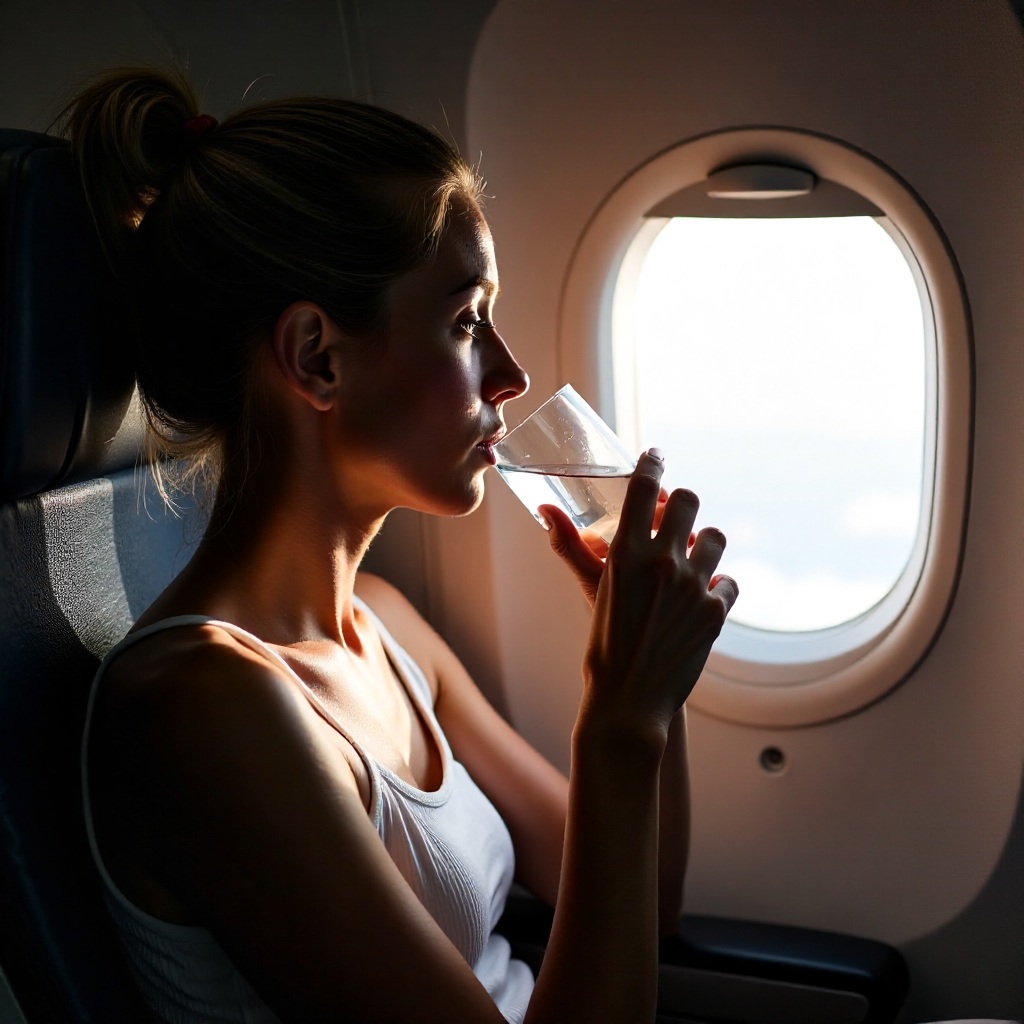
Sleep timing is the most important in-flight decision. If it's nighttime at your destination, prioritize sleep — use an eye mask, earplugs or noise-canceling headphones, and a neck pillow. If it's daytime at your destination, resist the urge to sleep, even if you're tired. Keeping your eyes open and exposing yourself to cabin light during those hours signals to your circadian rhythm that it's time to be awake.
Alcohol and caffeine both interfere with sleep quality in ways that feel subtle in the moment but compound over a long flight. Alcohol may help you fall asleep faster, but it suppresses REM sleep, leaving you groggier on arrival. Caffeine has a half-life of five to seven hours — a coffee at hour three of a ten-hour flight can still be active when you're trying to sleep at hour eight.
Move regularly. Cabin pressure and prolonged sitting slow circulation, which contributes to that heavy, foggy feeling on arrival. A short walk down the aisle every 60–90 minutes, combined with simple seated stretches, keeps blood moving and reduces physical fatigue.
Arrival Day: How to Reset Your Body Clock Quickly
The first 24–48 hours after landing are the highest-leverage window for resetting your circadian rhythm. What you do in this period largely determines how quickly you adapt.
Get outside as soon as possible. Natural sunlight is the single most powerful signal your SCN uses to recalibrate. Even 20–30 minutes of outdoor exposure in the morning (if you've arrived in the morning) can accelerate adaptation meaningfully. Avoid dark hotel rooms and heavy curtains — they delay the reset.
Align your meals with local time immediately. Eating at local meal times sends a secondary timing signal to peripheral clocks in your gut and liver. Don't eat a full dinner at 4 a.m. local time just because your body is asking for it — wait until a reasonable local hour, even if you're hungry earlier.
On napping: a short nap of 20–30 minutes can take the edge off severe fatigue without derailing your nighttime sleep. Anything longer than 45 minutes risks locking you into the wrong rhythm. Set an alarm. And try to hold out until at least early evening local time before napping at all.
Natural Remedies and Wellness Tools Worth Trying
Several natural approaches can support your body's adjustment — though none of them replace the fundamentals of light exposure and sleep timing.
Melatonin is the most studied option. It's a hormone your body naturally produces in response to darkness, signaling that it's time to sleep. Taking a low dose (0.5–1 mg is often as effective as higher doses) at local bedtime for the first few nights at your destination can help shift your rhythm. The timing matters more than the dose — melatonin taken at the wrong hour can push your clock in the wrong direction. According to Sleep Foundation, low-dose melatonin taken close to the target bedtime is generally considered safe for short-term use.
Herbal teas — chamomile, valerian root, passionflower — won't reset your clock, but they can ease the anxiety and restlessness that often accompany jet lag's disrupted nights. Think of them as comfort tools, not cures.
Grounding (also called earthing — walking barefoot on grass or natural surfaces) has a small but growing body of research suggesting it may reduce inflammation and improve sleep quality. The evidence is preliminary, but the practice costs nothing and fits naturally into a morning walk in a park, which also gets you that crucial sunlight exposure.
Avoiding blue light from screens in the hour before local bedtime is worth the effort. Blue light suppresses melatonin production and signals wakefulness to your brain — exactly the wrong message when you're trying to coax your circadian rhythm into the new time zone.
How Long Does Jet Lag Last — and When to Seek Help
For most travelers, jet lag resolves within two to seven days, depending on the number of time zones crossed and the direction of travel. Eastward trips across six or more time zones can take the full week; westward trips of similar distance often resolve in three to four days.
Children and older adults may experience longer recovery windows. Frequent long-haul travelers — flight crew, international business travelers — can develop chronic circadian disruption if they don't maintain consistent sleep hygiene practices between trips.
If fatigue, cognitive fog, or sleep disruption persists beyond ten days after arrival, it's worth speaking with a doctor. Persistent symptoms can occasionally indicate underlying sleep disorders, anemia, or thyroid issues that travel stress has brought to the surface rather than caused. The CDC's travel health resources offer guidance on when travel-related fatigue warrants medical evaluation.

Frequently Asked Questions
How many time zones does it take to cause jet lag?
Most people start noticing symptoms after crossing three or more time zones. Crossing one or two zones typically causes mild tiredness that resolves within a day without intervention.
Does melatonin actually help with jet lag?
Yes, when used correctly. Low doses (0.5–1 mg) taken at the target bedtime of your destination can help shift your circadian rhythm. The key is timing — taking it too early or too late can work against you.
Can you prevent jet lag completely?
Not entirely, but you can reduce its severity significantly. Starting sleep schedule adjustments before departure, managing light exposure, and staying hydrated can cut recovery time in half for many travelers.
Is jet lag worse flying east or west?
Flying east is generally harder because it requires advancing your sleep schedule, which goes against the body's natural tendency to run slightly longer than 24 hours. Westward travel asks you to stay up later — much easier for most people.
How do frequent travelers manage jet lag long-term?
Experienced long-haul travelers tend to prioritize consistent sleep hygiene, limit alcohol during flights, use melatonin strategically, and — when possible — allow an extra day before demanding engagements. Some adopt a "home time" strategy for short trips, staying on their origin time zone rather than attempting a full adjustment for a two-day stay.
Jet lag is one of travel's most predictable challenges — which also makes it one of the most manageable. Get your light exposure right, protect your sleep timing, and give your body the cues it needs to recalibrate. The difference between arriving wrecked and arriving ready often comes down to decisions made days before you even board the plane.