



Healthy Airport Food Options: A Traveler’s Survival Guide
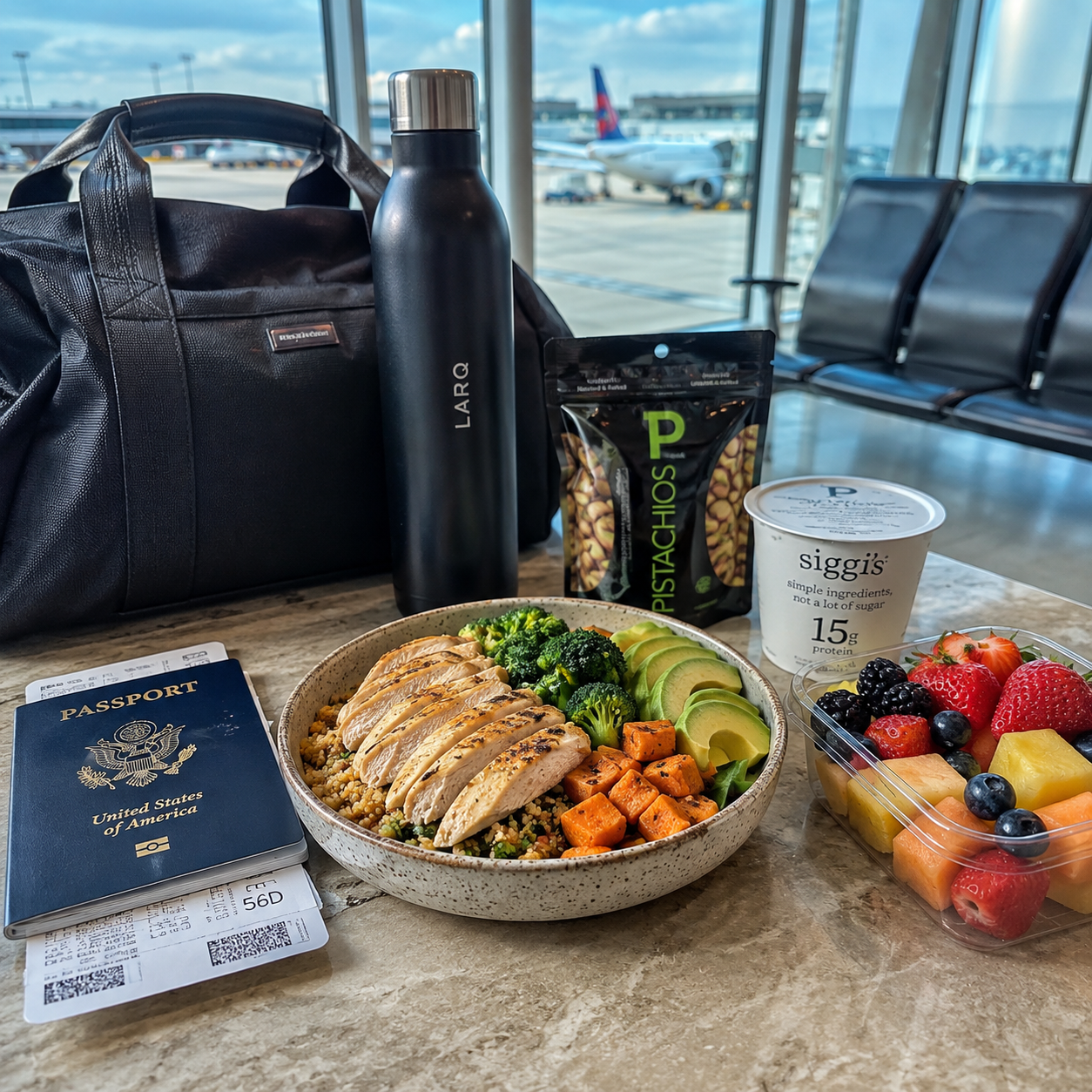
Airport food can support your journey instead of leaving you tired, thirsty, or uncomfortably full. With a few simple rules, you can find balanced meals, protein-rich snacks, fresh produce, and lower-sugar drinks in cafés, restaurants, kiosks, and convenience shops.
Why Healthy Airport Food Choices Matter
Healthy airport food choices matter because meals, snacks, and drinks can influence energy, digestion, focus, and comfort while you travel. A practical approach to travel nutrition helps you stay satisfied without requiring a perfect diet or a long search through every terminal.
Travel often disrupts normal routines. Early departures may shorten breakfast, security lines can delay lunch, and a flight delay can turn one planned meal into several hours of waiting. Eating only refined carbohydrates or highly sugary foods may leave you hungry again quickly. Very large, greasy meals may feel uncomfortable when you are sitting for a long period.
Hydration also deserves attention. Dry cabin air, walking through terminals, caffeine, alcohol, and busy schedules can make it easy to drink less water than usual. Carrying an empty reusable bottle through security and filling it afterward is a simple way to make hydration more consistent. The Centers for Disease Control and Prevention also emphasizes balanced eating patterns that include nutrient-dense foods rather than relying on one perfect meal.
Think in terms of your next few hours, not food rules. Before boarding, choose food that provides steady satiety and is comfortable to eat. During a flight, smaller portions and easy-to-digest snacks may work better. After landing, a normal balanced meal can help you return to your usual routine.
What to Look for in a Balanced Airport Meal
A balanced airport meal combines protein, fiber-rich carbohydrates, vegetables or fruit, and a modest amount of healthy fat. This plate-building framework works across airport restaurants, cafés, salad counters, and grab-and-go refrigerators.
Use the following four-part check:
- Protein: Look for eggs, chicken, fish, beans, lentils, tofu, Greek yogurt, cottage cheese, nuts, or seeds. Protein can make a meal more filling, although portion sizes and preparation methods vary.
- Fiber-rich carbohydrates: Choose oatmeal, whole-grain bread, brown rice, quinoa, beans, fruit, or vegetables. Fiber supports a satisfying meal, but suddenly eating a very large amount may not feel comfortable for every traveler.
- Fresh fruit or vegetables: Add berries, a banana, an apple, a side salad, vegetable soup, cut vegetables, or roasted vegetables when available.
- Healthy fats: Avocado, olive-oil dressing, hummus, nuts, seeds, and nut butter can add flavor and staying power. Choose moderate portions because fat-heavy meals may feel dense before a flight.
A useful visual formula is protein plus produce plus a high-fiber carbohydrate, with optional healthy fat. For example, oatmeal with nuts and fruit is more substantial than a sweet pastry alone. A whole-grain sandwich with chicken and vegetables offers more balance than a large bag of chips. A grain bowl with beans, vegetables, and dressing can work well when you have time to eat.
Read labels when packaged food is your only option. Compare serving size, protein, fiber, added sugar, and sodium. You do not need to reject a food because it contains sugar or salt. Instead, use the label to understand whether it will function as a snack, a meal, or a small part of one.
Best Healthy Airport Food Options
The best healthy airport food options are simple combinations that provide protein, fiber, produce, and enough energy for the next stage of your trip. Availability differs by terminal, so use these ideas as search categories rather than guaranteed menu items.
At cafés and breakfast counters
- Oatmeal topped with fruit, nuts, or seeds
- Eggs with whole-grain toast and fruit
- Plain or lightly sweetened yogurt with berries and granola
- A whole-grain breakfast sandwich with eggs and vegetables
- Fresh fruit paired with a cheese stick, yogurt, or nuts
When the café mainly sells pastries, combine a smaller pastry with a protein-rich side and water rather than treating the pastry as your only meal. That approach preserves enjoyment while improving satiety.
At restaurants and food courts
- Grilled chicken, fish, tofu, or beans with vegetables and rice
- A salad with a clear protein source, such as eggs, chicken, tofu, beans, or lentils
- A broth-based soup with whole-grain bread or a side of fruit
- A burrito bowl with beans, vegetables, salsa, and a moderate serving of rice
- A sandwich with vegetables, paired with fruit or a side salad
Request dressing, sauces, or mayonnaise on the side when possible. This gives you portion control without removing flavor. If the only available meal is fast food, look for a smaller sandwich, a bean- or chicken-based option, fruit, vegetables, or a side salad. One less-than-ideal meal does not determine the quality of your entire trip.
At kiosks and convenience shops
Convenience counters often have more useful choices than they first appear to. Search refrigerated shelves for hard-boiled eggs, yogurt, hummus with vegetables, fruit cups, cheese, sandwiches, salads, or milk. On dry shelves, look for unsalted or lightly salted nuts, roasted chickpeas, whole-grain crackers, trail mix with limited added sugar, and nut-butter packets.
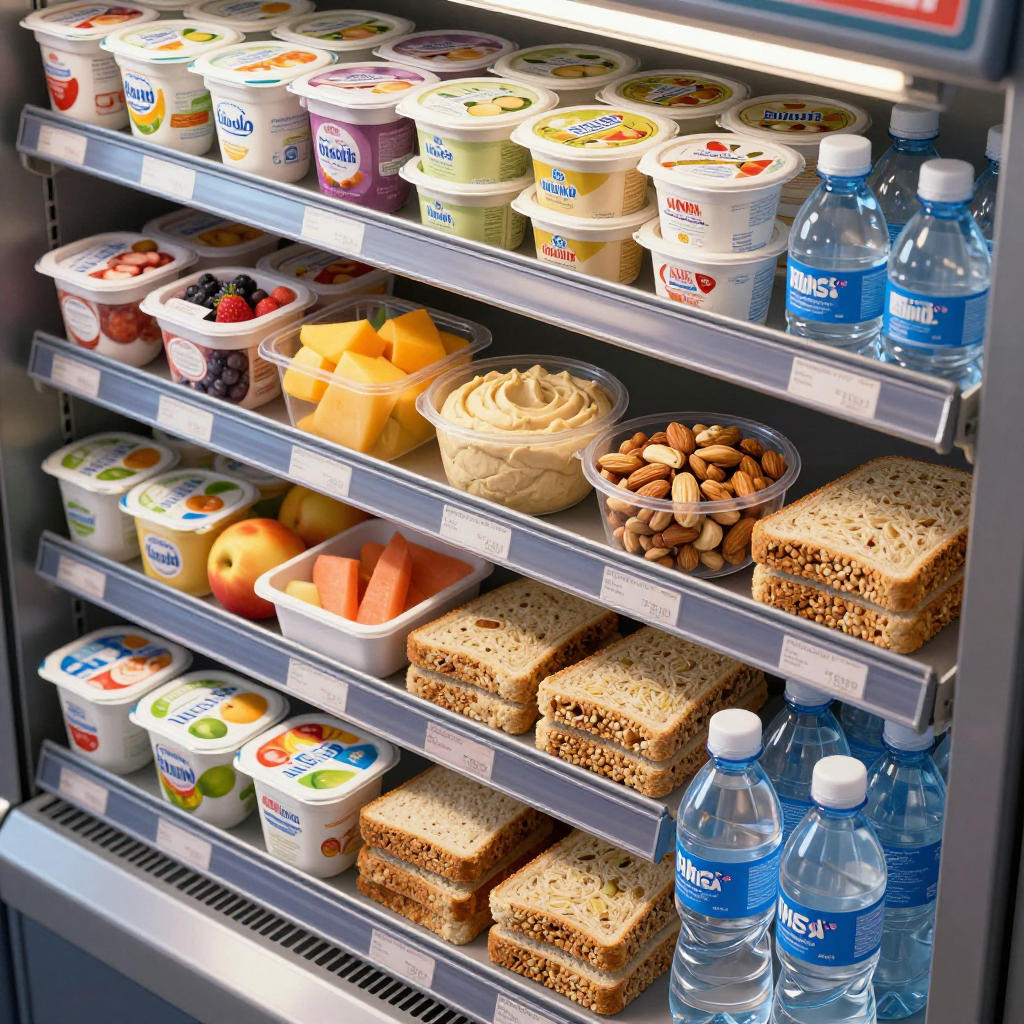
Smart Airport Snacks for Delays and Long Flights
The best airport snacks for delays and long flights are portable, satisfying, and easy to portion. Pairing protein with fiber or produce usually works better than relying on candy, chips, or a sweet drink alone.
- Apple, pear, or banana with nuts or nut butter
- Roasted chickpeas with whole-grain crackers
- Trail mix containing nuts, seeds, and dried fruit
- Protein bar with a moderate amount of added sugar and some fiber
- Hummus with whole-grain crackers or cut vegetables
- Plain yogurt with fruit, if you can keep it cold and consume it promptly
- Whole-grain sandwich or wrap with vegetables and a protein filling
- Cheese with fruit or whole-grain crackers
For a delay, buy one substantial item and one backup snack instead of grazing continuously. Portion control is easier when you separate food into defined servings. Keep perishable foods cold and follow airport security rules, airline policies, and local regulations for liquids and homemade food.
Timing matters. If boarding is soon, choose a compact snack rather than a large meal. If you expect several hours without reliable food, buy a balanced meal before boarding and save a shelf-stable snack for later. Travelers with food allergies should carry their own trusted options whenever possible because airport availability and cross-contact controls vary.
What to Drink at the Airport
Water is the most dependable airport drink, while unsweetened tea, plain coffee, and low-sugar beverages can add variety. Drink regularly, but do not force excessive amounts shortly before boarding.
Fill a reusable bottle after security, or buy water once you reach the gate. Sparkling water, unsweetened iced tea, and milk can also fit into a balanced travel plan. Check flavored drinks carefully because some contain more added sugar than their packaging suggests.
Coffee and tea are reasonable choices for many travelers, but caffeine affects people differently. A large, sweetened coffee drink can function more like a dessert than hydration. Choose a smaller size, limit syrups, and consider your usual caffeine tolerance, especially if you are traveling across time zones or flying late.
Alcohol may worsen dehydration, disturb sleep, or feel stronger at altitude for some people. Energy drinks can combine high caffeine with substantial sugar or other stimulants. Neither choice needs to be treated as forbidden, but both deserve moderation. Water between alcoholic drinks and a lower-sugar option alongside an energy drink can reduce the chance that beverages become your main source of calories and stimulation.
How to Choose Food When Time or Options Are Limited
When time or options are limited, choose the fastest available combination of protein, produce, whole grains, and water. A short decision rule prevents hunger and stress from making every choice feel complicated.
- Scan first: Check the nearest café, grab-and-go cooler, convenience shop, and vending area before deciding.
- Choose one anchor: Pick protein such as eggs, yogurt, nuts, beans, chicken, tofu, or cheese.
- Add one plant food: Select fruit, vegetables, salsa, soup, or a salad.
- Add fuel if needed: Choose oatmeal, whole-grain bread, rice, crackers, or another carbohydrate based on how long you will travel.
- Buy a backup: Keep a shelf-stable snack for a delayed gate change or missed meal.
At a vending machine, choose nuts, trail mix, roasted legumes, whole-grain crackers, popcorn, or a lower-sugar bar if available. Pair that item with water and look for fruit elsewhere in the terminal. If only familiar comfort food is available, use portion control and stop when comfortably satisfied. Wellness travel should remain realistic, including room for foods you genuinely enjoy.
Before leaving home, check the airport map and terminal dining listings. A five-minute search can reveal a café or market near your gate. Pack permitted snacks in their original packaging when practical, and avoid waiting until extreme hunger, when speed and cravings tend to dominate your decision.
Airport Eating Tips for Specific Dietary Needs
Travelers with dietary restrictions should plan a dependable backup, verify ingredients, and ask specific questions rather than assuming a dish is safe. Airport staff may have limited information, and shared preparation areas can create cross-contact risks.
Vegetarian and vegan choices
Vegetarian travelers can look for eggs, dairy, beans, lentils, hummus, tofu, vegetable soups, salads, and grain bowls. Vegan travelers should confirm sauces, dressings, bread, broths, and cooking methods because dairy, eggs, or animal-based ingredients may appear in otherwise plant-forward dishes.
Gluten-free choices
Fruit, nuts, yogurt, eggs, plain meat or fish, beans, rice, and some salads may be suitable, depending on preparation. Ask whether sauces, marinades, croutons, breading, or shared surfaces are involved. A packaged item labeled gluten-free may offer more certainty than a loosely described restaurant dish, although label standards and personal medical needs still matter.
Dairy-free and allergy-conscious choices
Check milk, butter, cheese, whey, casein, nut ingredients, sesame, soy, and other allergens as relevant to you. Tell the server clearly about the allergy and ask about cross-contact. For a serious allergy, do not rely solely on verbal reassurance; carry medically recommended emergency supplies and personally trusted snacks according to your care plan.
Language cards, airline notifications, airport accessibility services, and advance research can help. Still, availability changes. A flexible plan with two or three backup foods is safer than assuming one particular restaurant will have a suitable meal.
Frequently Asked Questions About Healthy Airport Food
What is the healthiest food to eat at an airport?
The healthiest airport meal is usually a balanced combination of protein, vegetables or fruit, a fiber-rich carbohydrate, and a moderate amount of healthy fat. Examples include oatmeal with fruit and nuts, a grain bowl with beans and vegetables, or a sandwich paired with fruit.
What are the best airport snacks for a long flight?
Good long-flight snacks include nuts, trail mix, roasted chickpeas, fruit with nut butter, hummus with crackers, yogurt, cheese with fruit, and protein bars with some fiber. Choose foods that travel well and match your dietary needs.
How can I eat healthy during a flight delay?
Buy one balanced meal and one portable backup snack rather than eating continuously. Use the protein-plus-produce rule, drink water regularly, and choose smaller portions if you expect to remain seated for several hours.
What should I drink before flying?
Water is the simplest choice before flying. Unsweetened tea, plain coffee, milk, and low-sugar beverages can also fit, while large amounts of alcohol, energy drinks, or highly sweetened drinks may be less comfortable for some travelers.
How can I find airport food for dietary restrictions?
Check terminal maps and restaurant menus before departure, ask about ingredients and cross-contact, and pack trusted backup snacks. Do not assume that a vegetarian, vegan, gluten-free, or dairy-free label guarantees safety for a medical allergy.
Healthy airport eating works best as a flexible system: build a balanced meal when you can, carry a protein-rich backup, drink water, and use portion control when choices are limited. The goal is to arrive feeling supported by your food, not judged by it.