

Mindful Travel: How to Stay Present and Reduce Stress on the Go
What Is Mindful Travel (and Why It Matters)?
Mindful travel is the practice of bringing deliberate, present-moment awareness to the experience of traveling — from the moment you pack your bag to the moment you return home. It's less a technique and more a shift in orientation: from treating travel as a series of tasks to treating it as a lived experience worth paying attention to.
Modern travel has a stress problem that most itineraries don't account for. Airports are engineered for throughput, not calm. Social media turns every trip into a content opportunity. And the rise of "checklist tourism" — cramming 12 highlights into 4 days — means many travelers return home more exhausted than when they left.
Wellness researchers have noted a growing disconnect between why people travel (rest, discovery, connection) and how they actually travel (rushed, overstimulated, screen-saturated). Mindful awareness doesn't eliminate the chaos of travel. It changes your relationship to it. That distinction matters enormously for both mental health and physical wellbeing.
Before You Leave: Setting a Mindful Intention for Your Trip
The most effective mindful travel starts before you board anything. Setting a clear intention — not a rigid plan, but a guiding question or theme — shapes the entire quality of your trip.
Ask yourself: What do I actually need from this trip? Rest? Novelty? Solitude? Connection? The answer should influence how you plan, not just where you go. A person craving restoration shouldn't book back-to-back day tours. Someone seeking connection probably shouldn't spend half the trip working remotely from a café.
Practically, this translates into a few pre-departure habits worth building:
- Pack light, mentally and physically. Overpacking is often anxiety made visible. A lighter bag means fewer decisions, less physical strain, and a subtle psychological signal that you trust yourself to handle what comes.
- Build in at least one unscheduled day for every four days of travel. Blank space in an itinerary isn't wasted — it's where the best moments usually happen.
- Approach the trip with curiosity rather than expectation. Expectations are disappointment blueprints. Curiosity is open-ended. The difference between "this isn't what I imagined" and "this is interesting" often comes down to which frame you brought with you.
Itinerary flexibility isn't a sign of poor planning. It's a structural commitment to staying present rather than just executing a schedule.
Staying Present in Transit: Airports, Trains, and Long Journeys
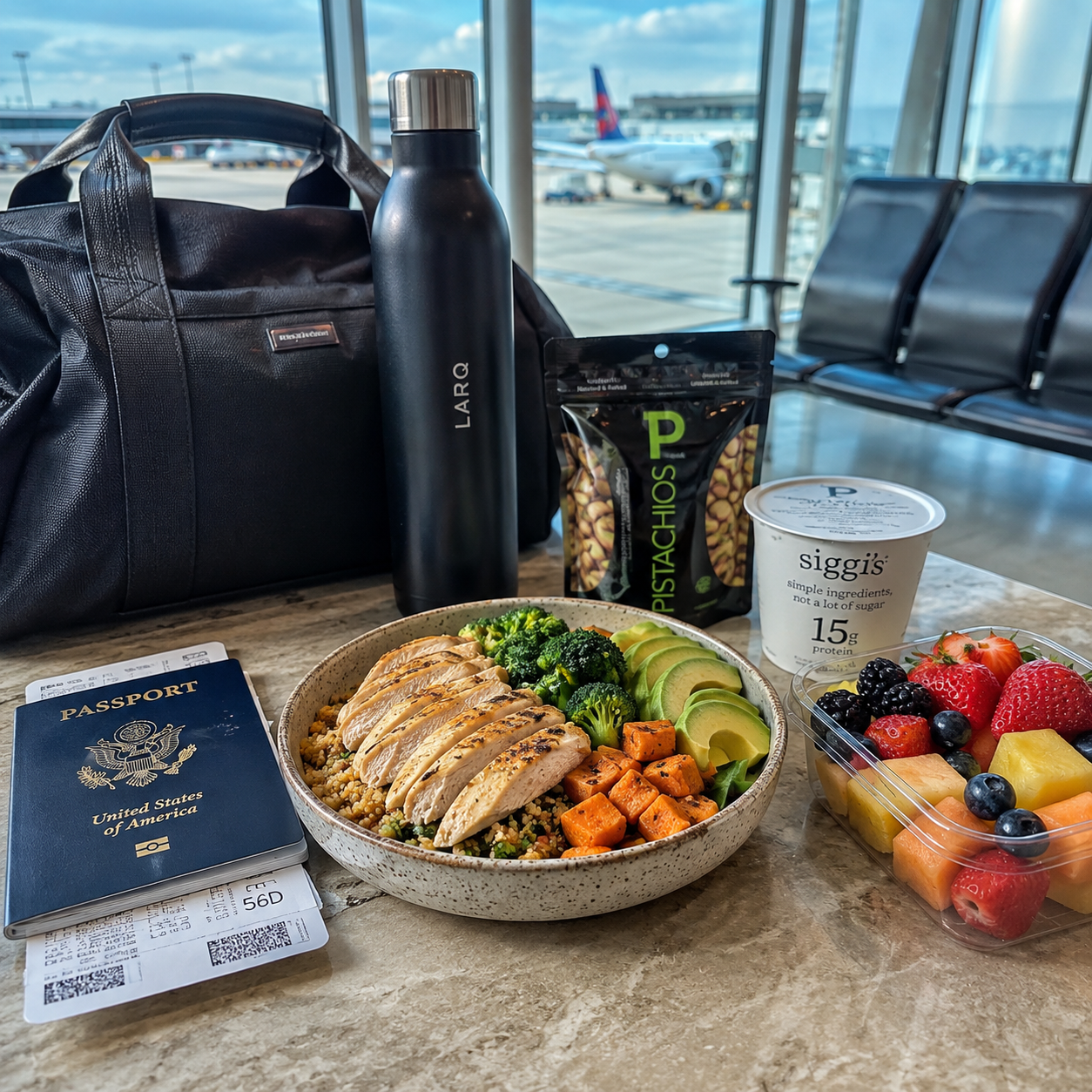
Transit is where travel stress peaks — and where mindfulness pays the highest return. The airport gate, the delayed train, the three-hour layover: these are the moments most travelers spend scrolling or catastrophizing. They're also opportunities.
When you feel the familiar tightening of travel anxiety — a delayed flight, a missed connection, a crowded terminal — conscious breathing is the fastest reset available. A simple technique: inhale for four counts, hold for four, exhale for six. The extended exhale activates the parasympathetic nervous system, reducing the cortisol spike that travel disruptions trigger. You don't need an app or a quiet room. You can do this at a gate surrounded by noise.
Sensory grounding techniques work equally well in transit. The classic "5-4-3-2-1" check-in — naming five things you can see, four you can hear, three you can physically feel, two you can smell, one you can taste — pulls attention away from anxious future-thinking and anchors it in the immediate environment. Done at an airport gate, it often reveals something genuinely interesting: the texture of the seat, the particular quality of light through terminal windows, the layered sound of a dozen languages at once.
Reframing delays matters too. A two-hour delay is genuinely inconvenient. It's also unscheduled time with no obligations — something most people claim they want but rarely get. Reading, writing, observing, resting: the delay becomes what you make of it.
Mindful Practices to Use at Your Destination
At your destination, the most powerful mindfulness practices are often the simplest ones — and they don't require retreating from the experience of travel.
Start mornings slowly. Resist the pull to immediately check what's "worth seeing" and instead spend the first 20-30 minutes just being in the place. Sit with a coffee. Walk without a destination. Let the neighborhood reveal itself before you impose an agenda on it. This isn't laziness — it's how you actually absorb a place rather than just moving through it.
Mindful eating is underrated as a travel practice. Eating slowly, without a phone, at a table rather than while walking — this is one of the most direct ways to engage with local culture. Food is cultural data. When you eat mindfully, you notice flavor profiles, ingredients, the social choreography of how locals eat together. You remember the meal for years instead of forgetting it by the next day.
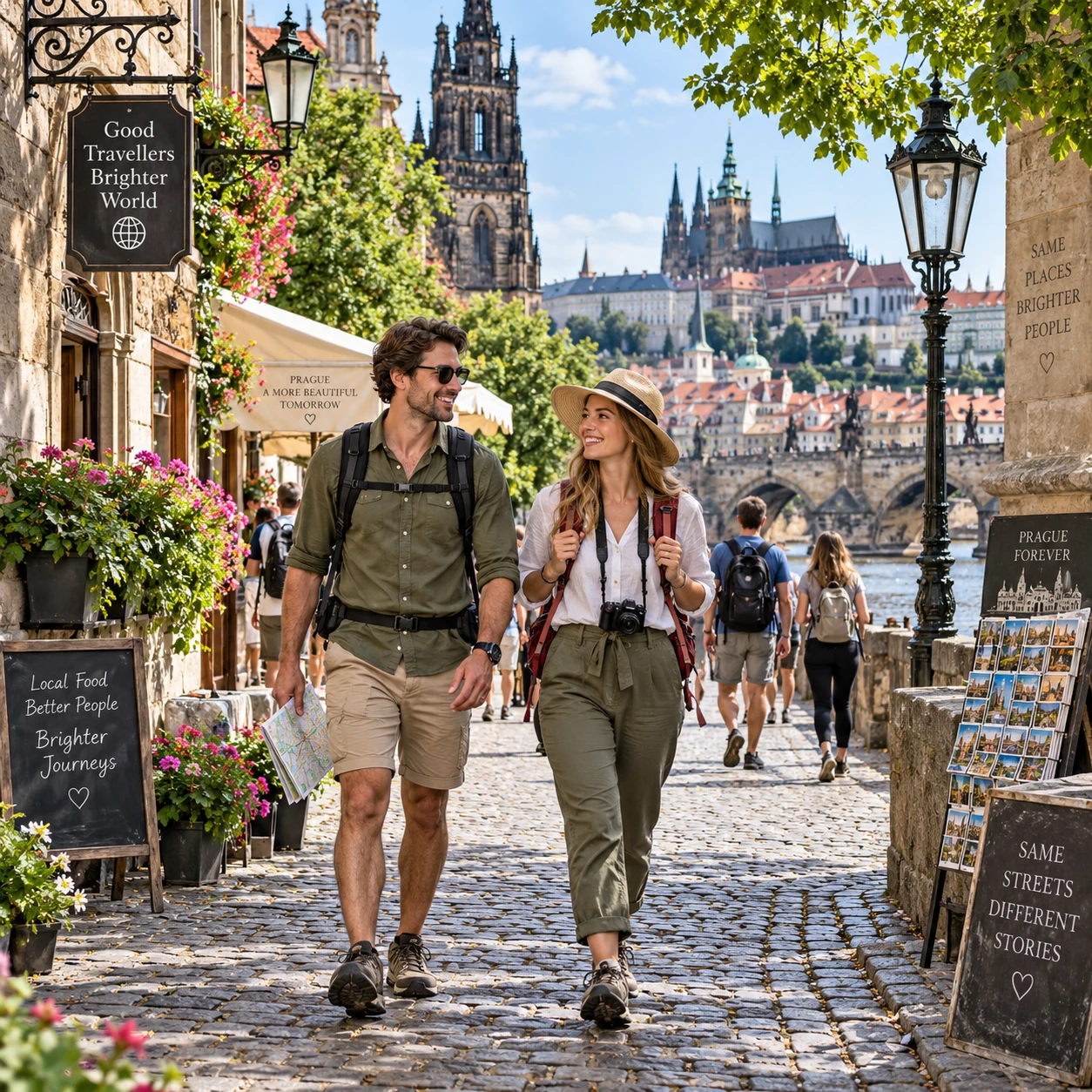
Walking without a map — or at least without following one — for at least one stretch per day trains your attention differently. You notice architecture at eye level rather than arrow-level. You get mildly lost and find something unplanned. Slow travel at its core is just this: moving at a pace that allows perception.
Engaging all five senses deliberately in a new place is a practice that sounds simple but takes conscious effort. What does this city smell like in the morning? What sounds are specific to this neighborhood? What's the texture of the local market? These sensory details are what make a place feel real rather than like a backdrop for photographs.
Managing Digital Overload While Traveling
The tension between documenting travel and actually experiencing it is real, and pretending otherwise doesn't help. A digital detox approach doesn't have to mean leaving your phone in the hotel room — it means being intentional about when and why you reach for it.
A useful rule: photograph first, then put the phone away. Take the shot, then spend five minutes actually looking at what you just photographed. Most people do the opposite — they photograph something and immediately review the image, missing the thing itself entirely.
Social media during travel deserves honest scrutiny. Posting in real time fragments your attention and subtly shifts your motivation — from experiencing to performing. Consider batching your posts: save the sharing for the evening or even for after you return. The experience doesn't become less real because you didn't broadcast it immediately.
Turning off non-essential notifications for the duration of a trip is one of the highest-leverage screen-free travel moves available. Work emails, news alerts, social pings — most of these can wait 10 days. The psychological effect of a notification-free phone is surprisingly significant. It stops feeling like a leash.
Travel Journaling as a Mindfulness Tool
Travel journaling is one of the most effective mindfulness practices for travelers, and one of the most underused. Writing by hand about what you've observed, felt, and thought on a given day does something that photography can't: it forces you to process experience rather than just capture it.
You don't need structure or literary ambition. A few sentences at the end of each day — what surprised you, what you noticed, what you want to remember — is enough. Over time, these entries become richer than any photo album because they contain the interior experience of the trip, not just its surface.
Journaling also serves as a grounding practice in real time. If you feel overwhelmed or overstimulated mid-trip, finding a quiet spot and writing for ten minutes is often more effective than any other reset. It externalizes the noise in your head and gives you perspective on it.
For travelers new to journaling, starting with a single prompt helps: What was the one moment today I want to remember? That's it. One moment, written in detail. The habit builds from there.
How to Return Home Without the Post-Travel Crash
The post-travel crash — that flat, disoriented feeling after returning from a trip — is partly physiological (jet lag, disrupted routine) and partly psychological. Mindful travel extends to the transition home.
Give yourself a buffer day between returning and resuming full obligations. Even one day at home before going back to work allows your nervous system to recalibrate. Jumping straight from the airport to a full schedule is a reliable recipe for burnout and resentment toward the trip you just took.
Spend some time integrating what the trip taught you. This isn't abstract — it's practical. Did you sleep better without the usual schedule pressure? Did you eat more slowly and enjoy it? Did you feel more alive walking without a destination? These observations are data. They point toward adjustments worth making at home, not just on vacation.
The goal of wellness travel isn't to escape your life. It's to return to it with more clarity about how you want to live it. That only happens if you take the time to reflect rather than immediately drowning the experience in the noise of normal life.
Frequently Asked Questions
Can mindful travel work on short trips or weekend getaways?
Yes — and it often works better on short trips because the time pressure forces intentionality. A single mindful day in a nearby city can be more restorative than a rushed two-week itinerary. The key is setting an intention before you leave and resisting the urge to over-schedule.
How do I stay mindful when traveling with kids or a group?
Group travel makes solitary mindfulness harder but not impossible. Build in short solo windows — an early morning walk, 15 minutes of journaling before others wake up. With kids, sensory engagement practices work naturally; children are often better at present-moment awareness than adults. Let them lead occasionally.
What's the difference between slow travel and mindful travel?
Slow travel is a logistical choice — staying longer in fewer places, moving at a reduced pace. Mindful travel is a psychological orientation — being present wherever you are, regardless of pace. They complement each other well, but you can practice mindful travel on a fast-moving trip, and slow travel can still be distracted and anxious.
How can I reduce travel anxiety before a flight?
Breathwork is the most accessible tool — specifically extended exhale breathing (inhale 4 counts, exhale 6-8 counts). Arriving at the airport earlier than necessary removes the main anxiety trigger. Avoiding caffeine before flying also has a measurable effect on anxiety levels during the flight itself.
Do I need to meditate to practice mindful travel?
No. Formal meditation is one path to present-moment awareness, but it's not the only one. Sensory grounding, conscious breathing, journaling, and intentional eating all cultivate mindfulness without requiring a meditation cushion. Start with whichever practice feels least intimidating and build from there.