
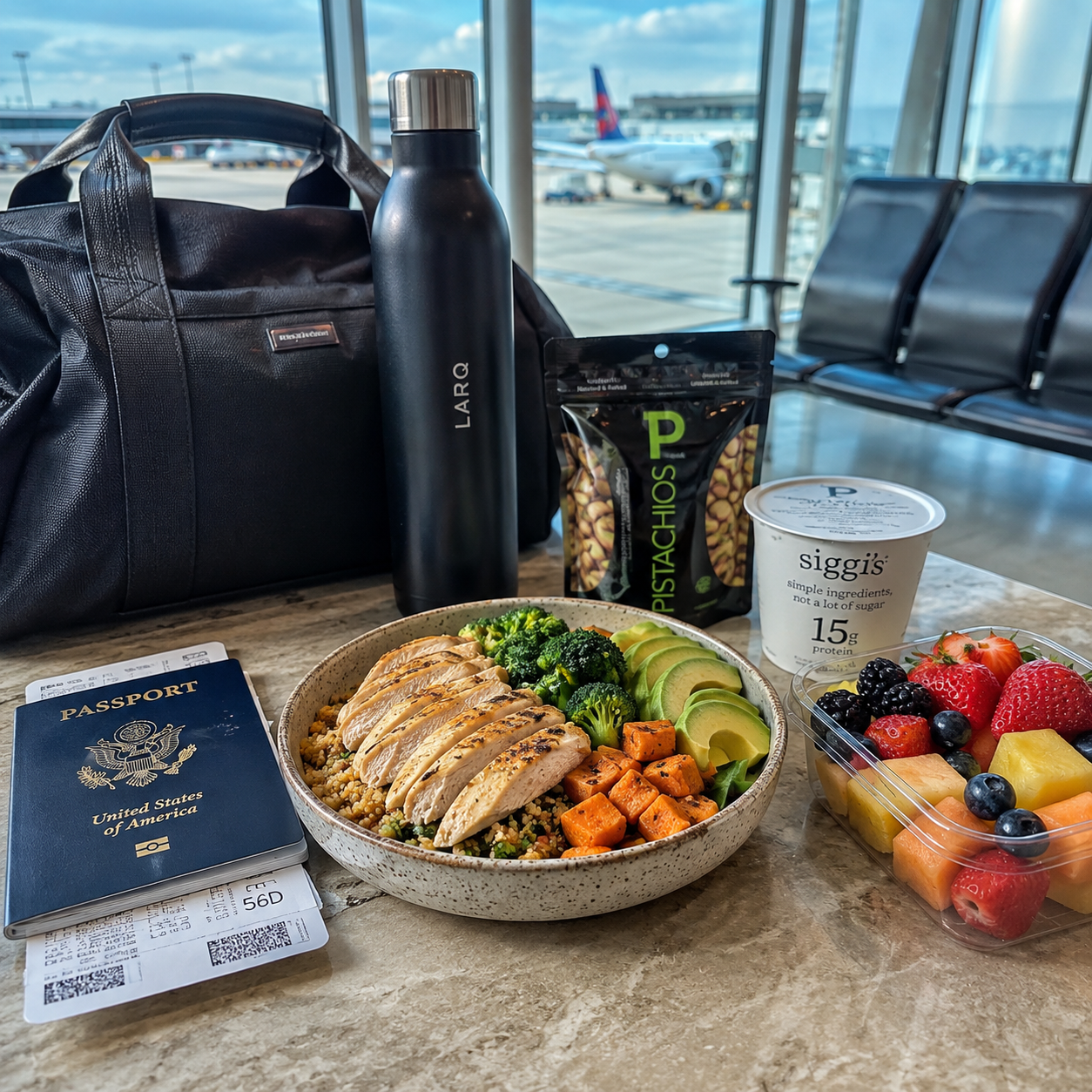



How to Maintain a Healthy Diet While Traveling: Practical Tips That Actually Work
Eating well at home is one thing. Eating well while navigating a 6 a.m. layover, a foreign menu, and a hotel minibar stocked with chips is something else entirely. Healthy travel isn't about perfection — it's about having a few smart habits that keep you feeling good without turning every meal into a negotiation with yourself.
Why Eating Well on the Road Is Harder Than It Sounds
Travel disrupts almost every routine that supports healthy eating: sleep schedules shift, meal timing goes out the window, and social pressure to "just try it" (which is actually wonderful, in moderation) compounds quickly across a two-week trip.
The real challenge isn't lack of willpower. It's that the environment works against you. Airports are designed to sell you convenience food. Hotel buffets reward volume. Time zones scramble hunger signals. When you're exhausted and unfamiliar with your surroundings, the path of least resistance is rarely the most nutritious one.
Acknowledging this matters because most travel health advice ignores context. The tips below are built around the actual constraints of being on the road — not an idealized version of travel where you have a kitchen and eight hours of sleep.
Pack Smart — Healthy Snacks to Bring From Home
The single most effective thing you can do for your diet while traveling is pack food before you leave. Having your own travel snacks eliminates the desperate airport purchase and the 11 p.m. vending machine moment.
The best portable options are foods that don't require refrigeration, won't get crushed, and actually satisfy hunger:
- Nuts and seeds — almonds, walnuts, pumpkin seeds. Dense in healthy fats and protein, they hold hunger for hours.
- Nut butter packets — single-serve sachets of almond or peanut butter work well with fruit or crackers.
- Whole grain crackers or oat bars — look for options with minimal added sugar and recognizable ingredients.
- Dried fruit (in small amounts) — figs, apricots, and mango add natural sweetness without the sugar crash of candy.
- Jerky or roasted chickpeas — high-protein options that travel well and feel more like a snack than a supplement.
For longer trips, consider a small soft cooler for the first leg of travel. Sliced vegetables, hard-boiled eggs, or hummus cups can survive a few hours with an ice pack and make a real difference on a long-haul flight where meal options are limited.
One practical note: check customs regulations if you're crossing international borders. Many countries restrict fresh produce and animal products. Packaged, shelf-stable snacks are almost always safe.
How to Navigate Airports and Transit Hubs Without Derailing Your Diet
Airport food has improved significantly in the past decade, but it still requires some navigation. The default options — fast food, pastries, candy — are designed for impulse buying, not nutritional value.
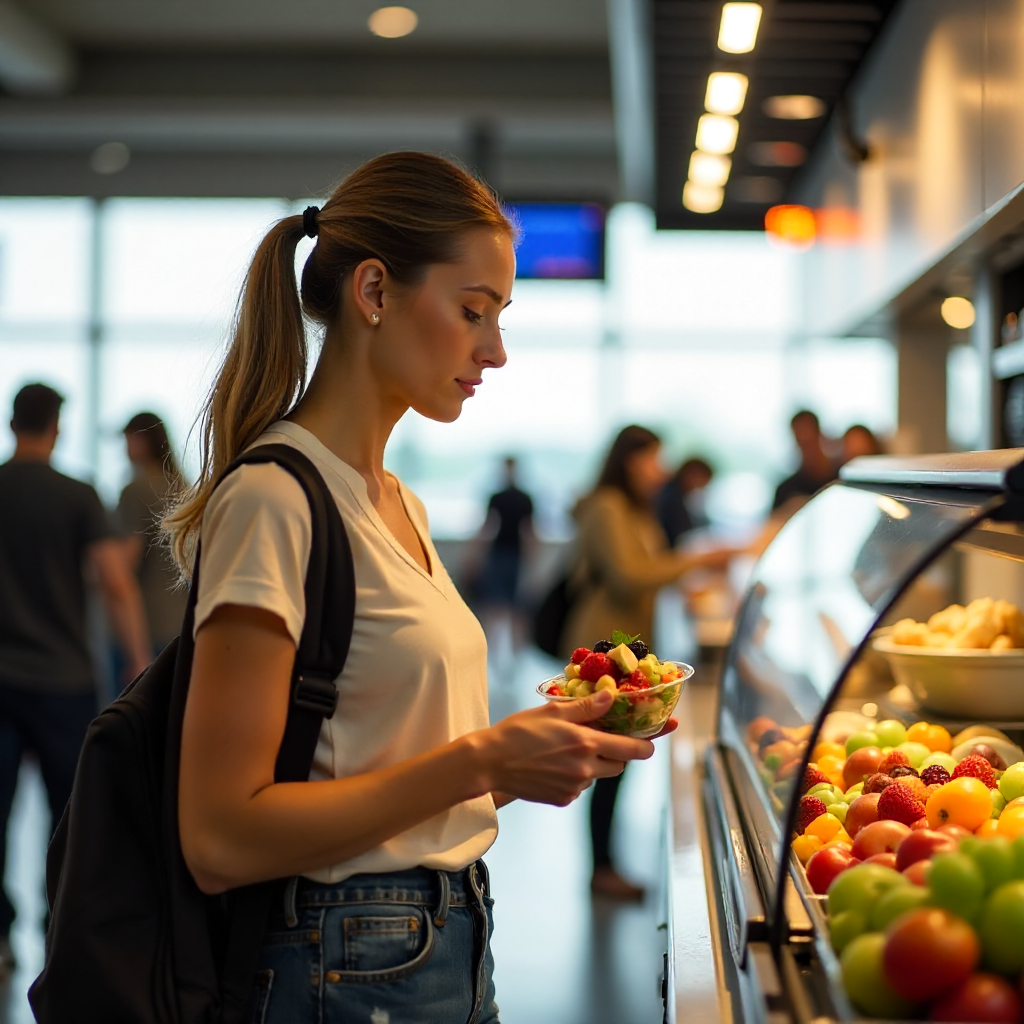
A few strategies that consistently work:
- Eat before you arrive if possible. A real meal at home removes the urgency that leads to poor choices in terminals.
- Look past the first food stall. Most large airports have at least one spot with grain bowls, salads, or sushi — you often just have to walk further to find it.
- At sit-down airport restaurants, order off the menu rather than going for combo deals. A grilled protein with vegetables is usually available even if it's not prominently featured.
- In convenience stores, look for hard-boiled eggs, Greek yogurt, fresh fruit cups, and string cheese — genuinely decent options that are easy to miss when you're scanning for familiar brands.
Hydration is especially critical in transit. Cabin air on flights is extremely dry — humidity levels often drop below 20% — which accelerates dehydration and can make you feel hungry when you're actually just thirsty. Bring an empty water bottle through security and fill it at a fountain before boarding. Aim for at least 250ml of water per hour in the air.
Eating Locally Without Eating Poorly — Using Markets and Grocery Stores
Local markets and neighborhood grocery stores are one of the most underused tools for healthy eating abroad. They're also one of the most rewarding parts of travel.
Visiting a farmers market or covered food market in a new city does two things at once: it connects you with regional food culture, and it gives you access to fresh, seasonal produce at prices far lower than restaurants. A bag of local fruit, some cheese, fresh bread, and a handful of olives can become a genuinely excellent lunch — often better, and almost always cheaper, than a tourist-district restaurant.
Supermarkets abroad are worth exploring too. In many European, Asian, and South American cities, grocery stores carry prepared foods, fresh salads, and whole food options that would cost three times as much in a café. Look for the deli counter, the prepared foods section, or the bakery aisle with whole grain options.
This approach also helps travelers managing dietary restrictions. Reading labels in a grocery store — even in another language, with a translation app — gives you far more control than trying to decode a restaurant menu under time pressure. Many stores now label vegan, gluten-free, and allergen-containing products clearly.
Smart Strategies for Restaurant Dining While Traveling
Restaurant meals are where most travel diets quietly unravel — not through dramatic choices, but through accumulated portion sizes, frequent dining out, and the social momentum of "we're on vacation." Portion control and menu awareness make a significant difference without requiring you to order salad every night.
A few practical approaches:
- Start with water and a vegetable-based starter before the main course. It's a simple way to moderate appetite without restricting what you order.
- Share dishes where the culture supports it. Many cuisines — Mediterranean, Southeast Asian, Middle Eastern — are built around shared plates, which naturally distributes portions.
- Don't be shy about simple requests. Asking for dressing on the side, grilled instead of fried, or extra vegetables instead of fries is standard in most restaurants and rarely causes friction.
- Apply mindful eating at the table: eat slowly, put the fork down between bites, and check in with hunger levels halfway through the meal. Travel fatigue often masks satiety signals.
The goal isn't to avoid local cuisine — quite the opposite. Regional food is one of the best reasons to travel. The goal is to engage with it intentionally rather than reactively.
Staying Hydrated and Supporting Gut Health on the Go
Digestive disruption is one of the most common and least discussed aspects of travel. Changes in water quality, unfamiliar bacteria, altered meal timing, and reduced fiber intake can all affect gut health within a few days of arriving somewhere new.
Hydration is the foundation. Beyond the flight itself, many travelers underdrink because they're busy, the water tastes different, or they're avoiding bathroom stops during long transit days. Chronic mild dehydration affects energy, digestion, and concentration — all things that matter when you're navigating somewhere unfamiliar.
To support digestion on the road:
- Prioritize fiber-rich whole foods — fruits, vegetables, legumes, whole grains — which are often easier to find at local markets than in restaurants.
- Consider bringing a small supply of a probiotic supplement if you're prone to digestive issues when traveling. Foods like yogurt, kefir, and fermented vegetables (kimchi, sauerkraut) also support the gut microbiome and are widely available internationally.
- Be cautious but not paranoid about food safety. In destinations where tap water isn't safe to drink, use bottled water for drinking and brushing teeth, and be selective about raw produce that may have been washed in tap water.
- Move after meals. Even a 10-minute walk after eating supports digestion and helps regulate blood sugar — and it's a natural part of exploring a new place.
The World Health Organization's food safety guidelines offer a useful reference for understanding food and water risks by region if you're traveling somewhere with higher uncertainty.
Building Flexible Habits — Healthy Eating Without the Guilt
Sustainable healthy eating while traveling looks like flexibility, not restriction. The travelers who consistently feel good on the road aren't the ones counting macros at every meal — they're the ones who have a few anchoring habits and let everything else breathe.
Think of it as an 80/20 approach: if most of your meals lean toward whole foods, adequate hydration, and reasonable portions, the gelato in Florence and the street tacos in Mexico City aren't a problem. They're the point.
A few habits worth anchoring to:
- Make hotel breakfast count. Most buffets have eggs, fruit, yogurt, and whole grain bread if you look past the pastries. A solid morning meal sets a nutritional baseline for the day.
- Treat one meal per day as your "anchor" — the one where you make a conscious, nourishing choice. The others can flex.
- Check in with how you feel, not just what you ate. Energy levels, sleep quality, and digestion are better indicators of whether your travel diet is working than any specific food rule.
Food is culture. Eating well while traveling doesn't mean eating the same way you do at home — it means staying curious, staying hydrated, and giving your body enough of what it needs to keep up with everything you want to do.
Frequently Asked Questions
What are the best healthy snacks to bring on a long-haul flight?
Nuts, nut butter packets, whole grain crackers, dried fruit, and roasted chickpeas are all solid choices. They're non-perishable, satisfying, and won't cause issues at security. Avoid anything with strong smells out of courtesy to fellow passengers.
How do I find healthy food options in a new city?
Start with local markets and grocery stores before defaulting to restaurants. Apps like Google Maps filtered by "health food" or "vegetarian" can surface options quickly. Asking hotel staff for neighborhood recommendations often yields better results than online searches.
Can I maintain my diet if I have specific dietary restrictions while traveling?
Yes, with some preparation. Research common ingredients in your destination's cuisine before you go. Learn key phrases in the local language for your restriction ("I don't eat gluten," "I'm allergic to nuts"). Grocery stores give you the most control, and many cities now have dedicated vegetarian, vegan, or allergen-friendly restaurants.
How do I avoid overeating at hotel buffets?
Do a full lap of the buffet before picking up a plate — it sounds simple, but it prevents the impulse loading that happens when you serve yourself as you walk. Fill half your plate with vegetables and protein first, then add other items. Eat slowly and skip the second plate unless you're genuinely still hungry.
Is it okay to indulge in local cuisine and still eat healthy overall?
Absolutely. One or two indulgent meals don't undo a week of reasonably healthy eating. The anxiety around "cheating" is often more damaging than the food itself. Enjoy the croissant, the pasta, the local dessert — then return to your anchoring habits at the next meal.