

Best Spas and Thermal Baths in Budapest, Reykjavik, and Beyond
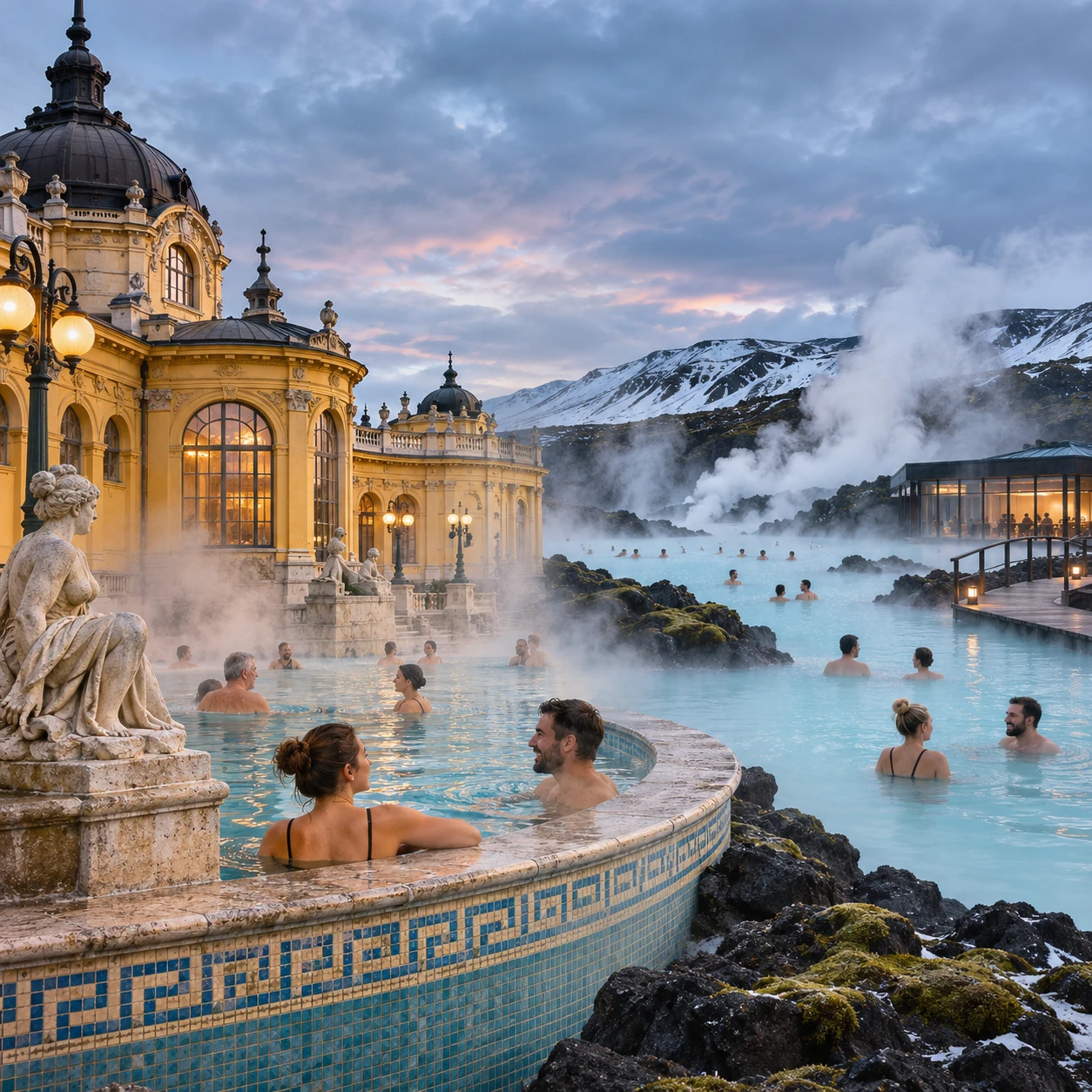
Budapest and Reykjavik offer two very different ways to unwind in warm water. Budapest draws visitors to grand historic bathhouses fed by mineral-rich springs, while Iceland pairs everyday community pools with dramatic geothermal hot springs and contemporary spa design. Both make rewarding stops on a wellness travel itinerary, but the right choice depends on whether you want architecture, local bathing culture, or a destination spa surrounded by volcanic scenery.
Why Budapest and Reykjavik Are Standout Spa Destinations
Budapest is known for historic thermal baths, while Reykjavik and the surrounding area are celebrated for geothermal pools and hot springs. The contrast gives wellness travelers a choice between centuries-old urban bathing traditions and Iceland’s landscape-shaped approach to soaking.
In Budapest, naturally heated spring water has long supported a city culture built around bathhouses. Visitors can move between warm pools, cooler water, steam rooms, and elaborate interiors, often in central locations. The atmosphere can feel social and architectural as much as restorative.
In Iceland, geothermal energy heats swimming pools across the country, including neighborhood facilities in Reykjavik. These are part of daily life, not just visitor attractions. Destination spas such as the Blue Lagoon and Sky Lagoon offer a more curated experience, with designed bathing circuits and striking settings. Geothermal water temperatures and mineral content vary, so each venue has its own character.
Neither format guarantees a particular health outcome. Choose a bath for its setting, facilities, and cultural experience, and follow any posted guidance if you have a health condition or are unsure about heat exposure.
Budapest’s Historic Thermal Baths
Budapest’s historic thermal baths combine spring-fed pools with distinctive architecture and different moods. Széchenyi is a sprawling, lively choice; Gellért is celebrated for its ornate indoor spaces, though visitors should check current operating status and services before planning a visit.
Széchenyi Thermal Bath
Set in City Park, Széchenyi Thermal Bath is among Budapest’s best-known bathing complexes. Its outdoor pools, framed by yellow Neo-Baroque buildings, are especially atmospheric on a cool day. Inside, you’ll find a larger network of pools and bathing facilities, though the full selection can vary with maintenance and operating conditions.
Széchenyi’s size makes it a practical choice if you want several bathing areas and a memorable architectural setting. It can also draw heavy crowds, particularly at popular times. Allow enough time to change, explore, and move between pools rather than treating it as a quick dip.
Gellért Thermal Bath
Gellért Thermal Bath is known for its Art Nouveau detail, including decorative tilework, stained glass, and elegant indoor spaces. Its atmosphere has traditionally felt more intimate than Széchenyi’s, making it appealing to travelers who value design and a historic interior as much as outdoor bathing.
Bath operations and access can change during renovation or maintenance. Confirm the venue’s current status directly before building it into a Budapest itinerary. For either bath, check which services are open on your chosen date and whether you need to bring or rent towels, swimwear, and other essentials.
For a first visit, pick one main bath rather than trying to fit several into a single afternoon. The experience is slower than a museum visit: changing, showering, and moving between pools all take time.
Reykjavik’s Geothermal Spa Experiences
Reykjavik offers both local swimming pools heated by geothermal energy and destination spas designed for longer visits. Choose a city pool for an everyday Icelandic ritual, or the Blue Lagoon and Sky Lagoon for a more polished, scenic spa experience.
City pools and local bathing culture
Reykjavik’s public pools are a good fit for travelers who want to see how geothermal bathing fits into local life. Many have outdoor pools and hot tubs, and their practical, community-focused character differs from a resort spa. Facilities vary by location, so check the pool’s current amenities and visitor guidance.
City pools can be a lower-key way to relax between sightseeing stops, but they may not offer the dramatic setting or extended spa rituals found at destination venues. They’re best approached as public facilities: follow posted rules, shower thoroughly before entering the water, and keep noise considerate.
Blue Lagoon and Sky Lagoon
The Blue Lagoon, near Keflavík International Airport, is a geothermal spa set amid dark volcanic terrain. Its milky-blue water and on-site facilities make it a popular option for travelers connecting through the airport or adding a spa stop to an Iceland trip. It is a developed attraction, so expect a planned, visitor-oriented experience rather than a secluded natural pool.
Sky Lagoon, close to Reykjavik, offers ocean views and contemporary design. Its signature bathing experience follows a set sequence, which may appeal if you want a structured spa visit without traveling far from the city. Compare the atmosphere, location, included facilities, and time required before booking either lagoon.
These venues are not interchangeable. The Blue Lagoon suits an itinerary built around its iconic volcanic setting; Sky Lagoon is convenient for a city stay; a neighborhood pool offers a more everyday experience. Advance reservations are sensible for popular spa sessions, especially when travel dates are fixed.
Beyond Budapest and Reykjavik: Other Spa Destinations to Consider
Other destinations offer thermal and geothermal bathing in settings that range from alpine valleys to historic European towns. Consider these alternatives if you want to build a trip around hot springs or add a different bathing tradition to a wider journey.
- Japan: Onsen towns such as Beppu and Hakone are known for bathing culture shaped by natural hot springs. Rules and facilities vary, so learn the customs for each bath before visiting.
- Türkiye: Pamukkale combines mineral-rich waters with striking white travertine terraces. Access to protected areas is regulated, so follow current visitor instructions and avoid assuming every pool is open for bathing.
- Italy: Tuscany and other regions have thermal destinations ranging from developed spa facilities to outdoor spring settings. Check whether a site is managed, free to access, or requires a reservation.
- New Zealand: Rotorua’s geothermal landscape includes hot pools and spa facilities, alongside strong Māori cultural connections that visitors should treat with respect.
These are starting points, not a ranking. Natural conditions, access rules, and facilities differ widely; choose a destination that fits your route and preferred level of comfort.
How to Choose the Right Bath or Spa for Your Trip
Choose a bath or spa by matching the setting, level of structure, and practical demands to the kind of visit you want. A historic bath, neighborhood pool, and destination spa each offer a different balance of culture, convenience, and amenities.
- For architecture: Look at Budapest’s historic bathhouses, particularly Széchenyi or Gellért when operating and accessible.
- For a local ritual: Try a public pool in Reykjavik and follow its bathing etiquette.
- For scenery and a planned spa circuit: Compare the Blue Lagoon and Sky Lagoon by location, facilities, and booking options.
- For flexibility: A city pool or central bath can fit more easily around sightseeing than a destination spa requiring extra travel time.
Next, compare the less glamorous details: how long you’ll spend getting there, whether admission includes towels or spa access, what you need to bring, and whether facilities suit your needs. A premium experience may offer convenience and design, but it can mean less spontaneity and a higher overall trip cost. A public pool may be simpler and more local, yet have fewer services.
One useful planning rule is to treat bathing as an anchor activity, not a filler. Choose a time when you can stay long enough to enjoy the visit without rushing to the next attraction.
Practical Tips for a Relaxing Visit
Plan ahead, pack the essentials, and follow each venue’s current instructions for bathing etiquette. Booking needs, entry conditions, and facilities vary, so verify details with the bath or spa before you go.
- Check access and operating information: Look for current hours, maintenance notices, ticket availability, age requirements, and any restrictions on particular facilities. Do this close to your visit, since conditions can change.
- Book when timing matters: Popular Icelandic spas may use timed entry and can sell out for preferred slots. Budapest baths may also offer online tickets; check the official venue information rather than relying on old schedules or prices.
- Pack thoughtfully: Bring swimwear and a towel unless your ticket clearly includes them. A waterproof bag and sandals can be useful, but confirm what is permitted and available on site.
- Follow bathing etiquette: In Icelandic public pools, shower thoroughly before entering the water and observe posted instructions. In Budapest, read the rules for your specific bath, including swimwear requirements and access to saunas or pools.
- Respect heat and your limits: Take breaks, drink water, and leave a hot pool if you feel unwell. People who are pregnant or have a medical condition should seek appropriate medical advice before using hot-water facilities.
A common planning mistake is assuming all thermal baths follow the same rules. That can lead to an uncomfortable arrival, especially when showering requirements or included equipment differ. Another is booking a spa too close to a flight or tour: allow time for travel, changing, and delays. Check current entry requirements directly with the venue, then enjoy the visit at an unhurried pace.
Frequently Asked Questions
What is the difference between a thermal bath and a geothermal spa?
A thermal bath is a bathing facility supplied by naturally warm spring water, often with pools and other bathing areas. A geothermal spa is a broader term for a developed wellness venue that uses geothermal heat or water; it may include designed pools, treatments, and additional amenities. Usage varies by destination, so check how each venue describes its water and facilities.
Do you need to book Budapest baths or Reykjavik spas in advance?
It depends on the venue and date. Booking ahead is a sensible choice for popular Reykjavik-area destination spas and for Budapest visits with fixed timing. Confirm current ticket arrangements with the venue, since walk-in availability and entry rules can change.
What should you bring to a thermal bath?
Start with swimwear and a towel, and check whether the venue supplies or rents either one. Sandals and a bag for wet items can make the visit more comfortable. Follow the facility’s rules about personal items and poolside footwear.
Are bathing rules different in Budapest and Iceland?
Yes. Rules vary by facility, but Icelandic public pools commonly require a thorough shower before swimming, with instructions posted on site. Budapest baths have their own requirements for swimwear and access to different areas. Read the local guidance at each venue rather than assuming one country’s customs apply everywhere.